
10 Proven Agency Pricing Models to Double Your Profit Margins This Month
Table of contents
- How Agency Pricing Models Work
- 1. Hourly Rate Pricing
- 2. Flat Fee (Fixed Price)
- 3. Retainer Model
- 4. Value Based Pricing
- 5. Project Based Pricing
- 6. Revenue Share
- 7. Flat Fee and Bonus
- 8. Subscription Based (Productized)
- 9. Performance Based Pricing
- 10. Revenue Based Pricing
- Summary of Agency Pricing Models Comparison
Is your agency stuck in a cycle of feasting and famining, or are you finding that despite working more hours, your bank account isn't growing? The problem often isn't your work ethic or the quality of your output; it is the pricing model you are using. Many digital marketing agencies rely on outdated structures that punish efficiency and cap revenue.
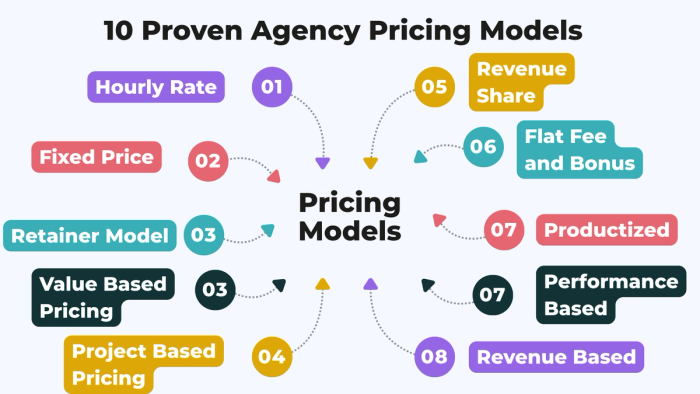
By reading this post, you will discover exactly how to price your services to unlock higher profitability, better client relationships, and scalable growth. We will break down the best strategies so you can implement a new model immediately.
How Agency Pricing Models Work
An Overview of the Mechanics of Pricing
At its core, an agency pricing model defines the exchange of value between a marketing agency and a client. It dictates not just how much you charge, but how you charge—whether it is based on time, output, or results. Understanding agency pricing models is crucial because the right choice aligns the agency's incentives with the client's goals.
The Clear Benefit of Choosing the Pricing Model
When you select the correct model, you move away from arbitrary numbers and toward a system that justifies your worth. Digital marketing agency pricing shouldn't be a guessing game. A well-structured agreement protects your time, ensures cash flow, and positions you as a partner rather than just a vendor. Whether you run creative agencies, SEO agency pricing models, or social media agency pricing models, the mechanics remain the same: clarity creates confidence.
1. Hourly Rate Pricing
The "Trade Time for Money" Standard
Overview: You charge a set rate for every hour worked. This is the most basic form of agency pricing.
- Positives: It is easy to explain how to price based on hours. You get paid for every minute you work, protecting you from scope creep.
- Downsides: It punishes efficiency. The faster you are, the less you make. It also creates friction as clients scrutinize your timesheets.
- When it works: Best for ad-hoc consulting, maintenance tasks, or undefined scopes where the project length is unknown.
- Real Life Example: A digital marketing agency troubleshooting a broken tracking code for a client's website charges $150/hour for 3 hours of work.
- Best Practices: Use strict time-tracking software and set a cap to prevent "bill shock" for the client.
"We use hourly pricing for scope-creep protection. If the client wants 'just one more thing,' they know it’s on the clock." — Tech Dev Shop
2. Flat Fee (Fixed Price)
Certainty for You and the Client
Overview: A single price for a specific deliverable.
- Positives: The client loves budget certainty. If you are fast, your effective hourly rate skyrockets.
- Downsides: If the project drags on or becomes complex, you eat the cost. Scope creep is a major risk.
- When it works: Great for productized services like logo design, website audits, or specific digital marketing setups.
- Real Life Example: A creative agency charges $5,000 flat for a corporate branding package (Logo, Brand Guidelines, Business Cards).
- Best Practices: Define the scope rigidly. Anything outside the "box" requires a new SOW (Statement of Work).
- Agency Quote:
"Flat fees simplified our sales process. Clients say 'yes' faster when they know exactly what the bill will be." — Boutique Branding Studio
3. Retainer Model
The Holy Grail of Recurring Revenue
Overview: The client pays a set monthly fee for a pre-defined scope of work or access to the agency.
- Positives: Predictable cash flow (MRR). It fosters long-term relationships and allows for better resource planning.
- Downsides: Clients may feel they "own" your time. "Scope creep" can happen if boundaries aren't set.
- When it works: Ideal for SEO agency pricing models, social media, and ongoing content marketing.
- Real Life Example: A marketing agency charges $4,000/month to manage 3 social media channels and write 4 blog posts per month.
- Best Practices: Use a "use it or lose it" policy for hours/deliverables to prevent rolling over work into a massive pile-up.
- Agency Quote:
"Retainers allowed us to hire full-time staff because we finally knew what our income would be three months from now." — Growth Marketing Firm
4. Value Based Pricing
Pricing the Result, Not the Effort
Overview: You charge based on the perceived or actual value delivered to the client, rather than the hours worked.
- Positives: Highest profit potential. It aligns you with the client's success. This is often considered the best of the agency pricing models.
- Downsides: Difficult to sell if you cannot prove the ROI. Requires high trust and negotiation skills.
- When it works: When your work has a massive impact on the client's bottom line (e.g., a sales funnel overhaul).
- Real Life Example: A consultant identifies a $1M leak in a company's sales process. They charge $100k to fix it, regardless of whether it takes 1 week or 1 month.
- Best Practices: Anchor the price against the revenue they will generate. "Is paying $50k worth making $500k?"
- Agency Quote:
"We stopped selling inputs and started selling outcomes. Our revenue tripled without working a single extra hour." — Consulting Agency
5. Project Based Pricing
Defined Scope, Defined Price
Overview: Similar to flat fee but usually for larger, complex undertakings with milestones.
- Positives: Clear deliverables. High margins if you have efficient processes based on templates.
- Downsides: Risk of underestimation. If the project stalls due to client delays, your cash flow pauses.
- When it works: Website builds, app development, or large campaigns with a clear beginning and end.
- Real Life Example: A digital agency builds a custom e-commerce website for $25,000, billed 50% upfront and 50% on launch.
- Best Practices: Build in a buffer for "unknowns" and link payments to specific milestones, not just calendar dates.
- Agency Quote:
"Project pricing works best when we have a blueprint. We know the road, so we know the toll." — Web Dev Agency
6. Revenue Share
Skin in the Game
Overview: The agency takes a percentage of the gross revenue generated from their activities.
- Positives: Unlimited upside. If the client scales to millions, you make millions. Very attractive to cash-poor, high-potential clients.
- Downsides: You share the risk. If the product sucks or the market crashes, you earn nothing for your hard work.
- When it works: E-commerce marketing, lead generation where sales are tracked digitally.
- Real Life Example: An email marketing agency takes 10% of all revenue generated specifically from the email flows they build.
- Best Practices: Ensure you have total transparency and audit rights on the client's analytics and sales data.
- Agency Quote:
"We only work with partners where we know we can blow the numbers out of the water. We bet on ourselves." — E-com Ads Agency
7. Flat Fee and Bonus
Security Meets Incentive
Overview: A hybrid model where you cover your costs with a base fee and earn extra for hitting specific KPIs.
- Positives: Covers your "keep the lights on" costs while incentivizing performance.
- Downsides: Complexity in contracts. Arguments can arise over attribution (did your ad cause the sale?).
- When it works: Digital marketing agencies that want stability but want to prove they are results-driven.
- Real Life Example: A PPC agency charges $2,000/month management fee + a $500 bonus for every month CPA (Cost Per Acquisition) stays below $20.
- Best Practices: Make the bonus criteria binary (Hit vs. Miss) to avoid ambiguity.
- Agency Quote:
"The base fee keeps our team paid, but the bonus pays for our vacations. It keeps the team hungry." — Performance Agency
8. Subscription Based (Productized)
Service as a Software (SaaS) Style
Overview: Standardized packages sold like a Netflix subscription.
- Positives: extremely scalable. Low sales friction. Clients understand exactly what they get.
- Downsides: High churn rate potential. The work can become monotonous.
- When it works: Graphic design (unlimited requests), content writing, or basic SEO maintenance.
- Real Life Example: A design agency offers "Unlimited Graphic Design" for $499/month, with a 24-hour turnaround time.
- Best Practices: Limit the number of active requests at one time (e.g., "one active task at a time").
- Agency Quote:
"Productizing our service into a subscription removed the proposal writing phase entirely. Clients just click 'Buy'." — Design Pickle Style Agency
9. Performance Based Pricing
Payment for Results Only
Overview: You only get paid when a specific result (lead, sale, click) occurs.
- Positives: The easiest sell in the world ("You don't pay unless we win").
- Downsides: High risk. You can work for months for free if the campaign fails.
- When it works: Lead generation for service businesses (roofers, dentists) or affiliate marketing.
- Real Life Example: A lead gen agency generates appointments for a solar company and charges $100 per qualified appointment booked.
- Best Practices: Qualify the leads rigorously so the client cannot dispute the quality.
- Agency Quote:
"We don't send invoices for hours. We send invoices for leads. Our clients never question the value." — Lead Gen Specialist
10. Revenue Based Pricing
Tied to Company Growth
Overview: Similar to revenue share, but often tied to net revenue or total company growth rather than just attributed sales.
- Positives: deeply integrates you into the client's business structure. Can lead to equity or partnership roles.
- Downsides: You are affected by their operational costs (if based on net). Requires deep financial disclosure.
- When it works: CMO-as-a-service, business consulting, or full-stack growth partnerships.
- Real Life Example: A growth partner takes 5% of year-over-year revenue growth for the entire company.
- Best Practices: Ensure the contract specifies how revenue is calculated and excludes refunds/returns.
- Agency Quote:
"We position ourselves as partners, not vendors. If the company grows, our check grows." — Growth Consultancy
Summary of Agency Pricing Models Comparison
Choosing the best agency pricing models depends on your niche. Creative agency pricing models often favor Flat Fees or Projects to protect artistic value, while digital marketing agencies are moving toward performance or value based structures.
Whether you are looking for alternatives for creative agencies or standard digital agency pricing models, remember: the goal is to disconnect your income from your time.